New Start USA – NSUSA
(Class Project)
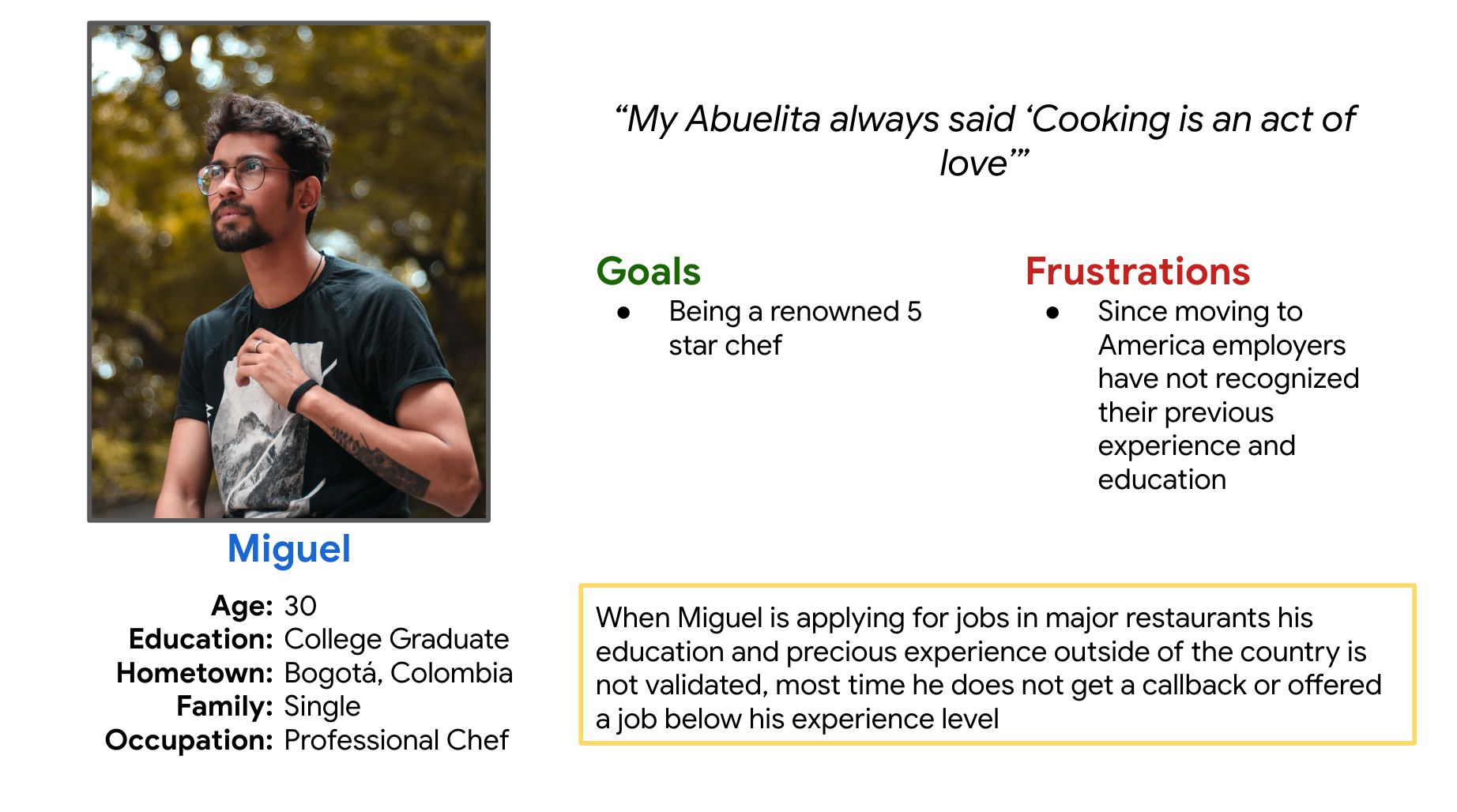
NSUSA was a solo class project, but the user research behind it was anything but theoretical. As an immigrant myself, I drew on my own experience and conducted research with people I know personally — a group of friends and community members, many of whom hold college degrees or professional certifications from their home countries that don't translate cleanly into the American job market.
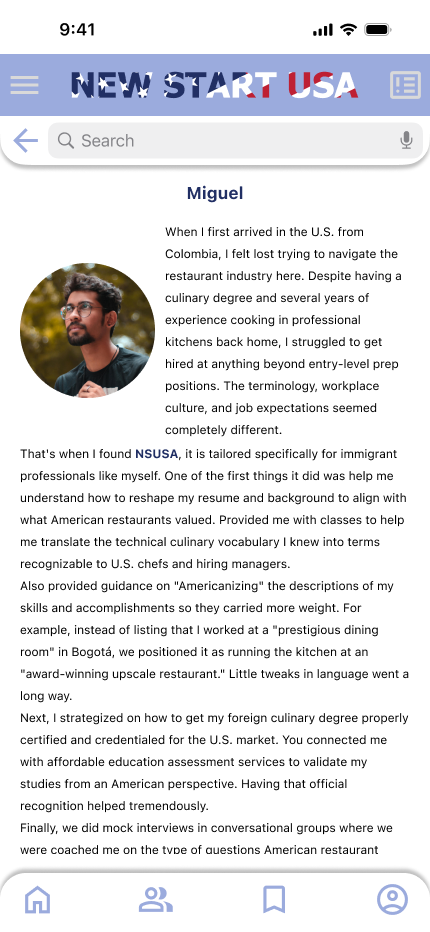
That proximity to the problem shaped every design decision. Of the five pain points identified in research, credential translation emerged as the most quietly devastating — not because users lacked qualifications, but because they had no clear path to making those qualifications legible to U.S. employers. The design responded directly to that: surfacing credential translation guidance as a primary feature rather than burying it in secondary navigation.
One insight that surprised me: beyond skills and language barriers, many highly-qualified users were staying stuck in entry-level roles due to a lack of confidence. That finding pushed the design toward a tone that was validating and empowering, not just informational.
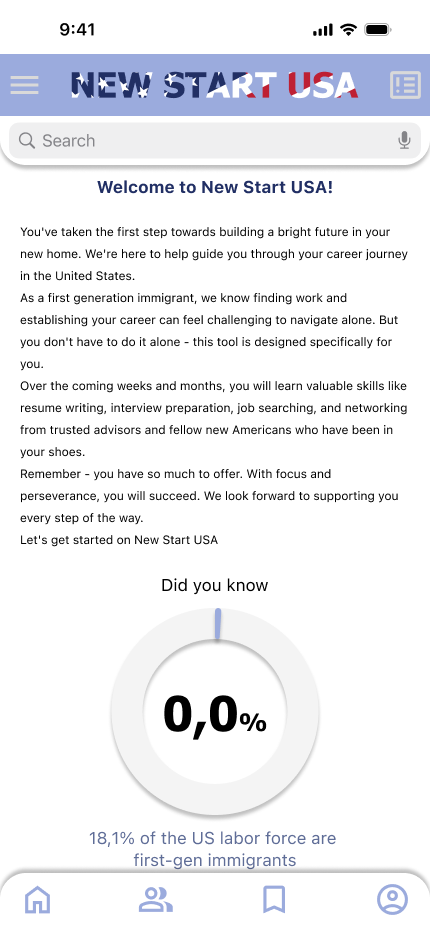
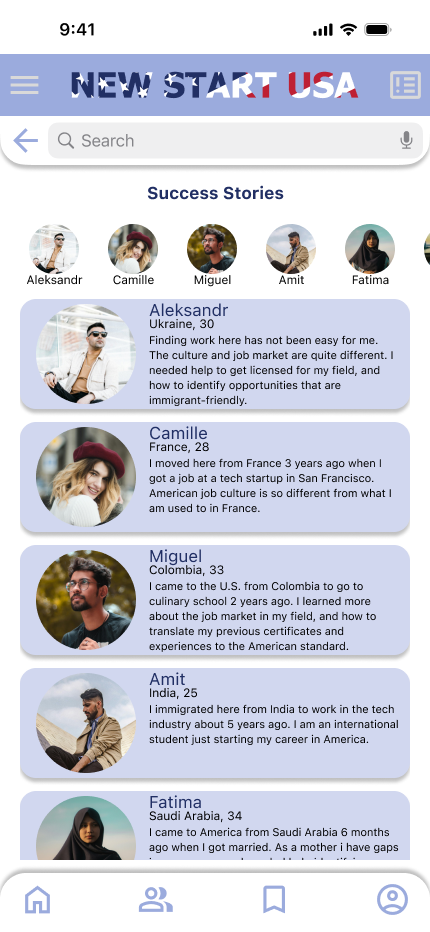
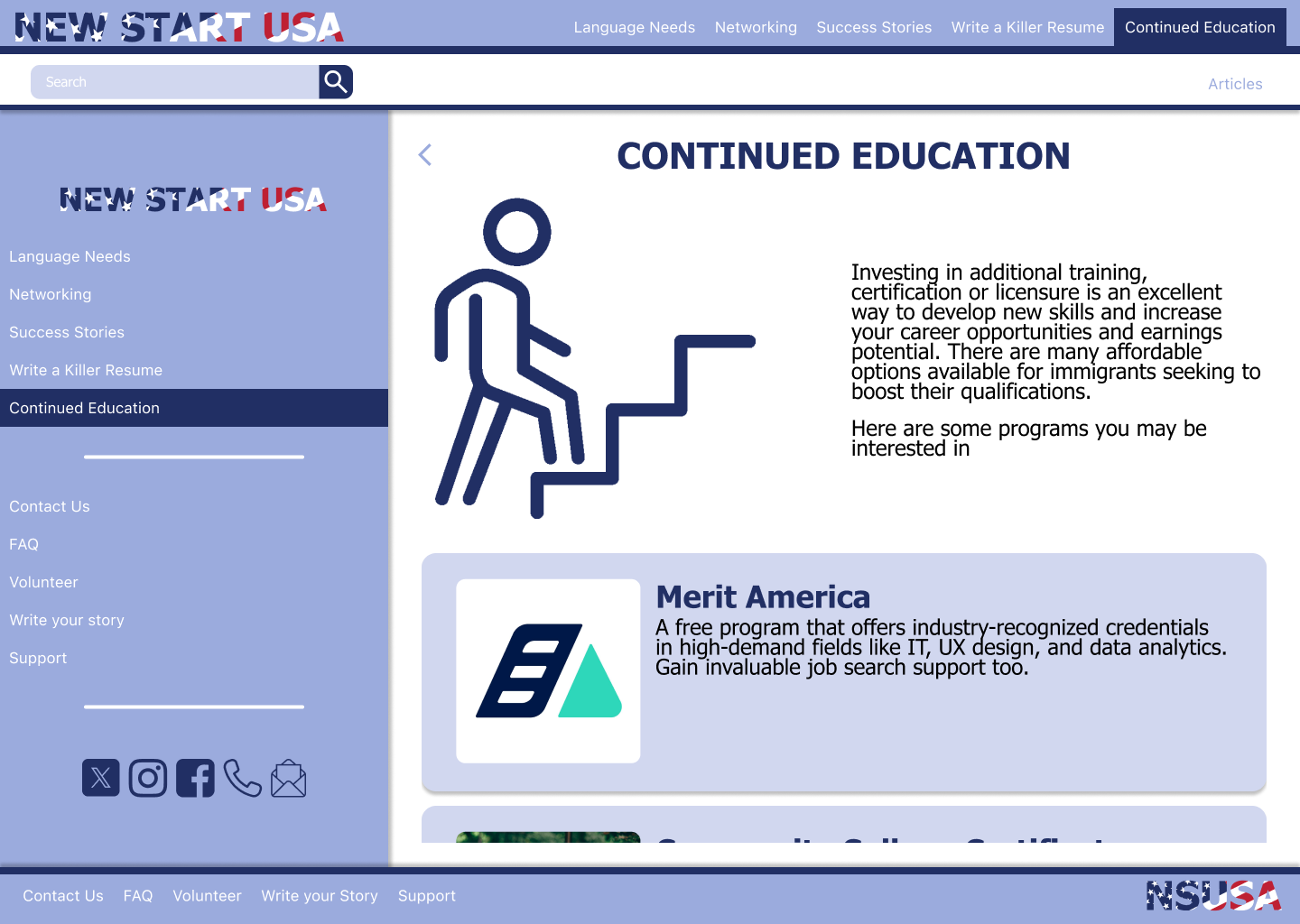
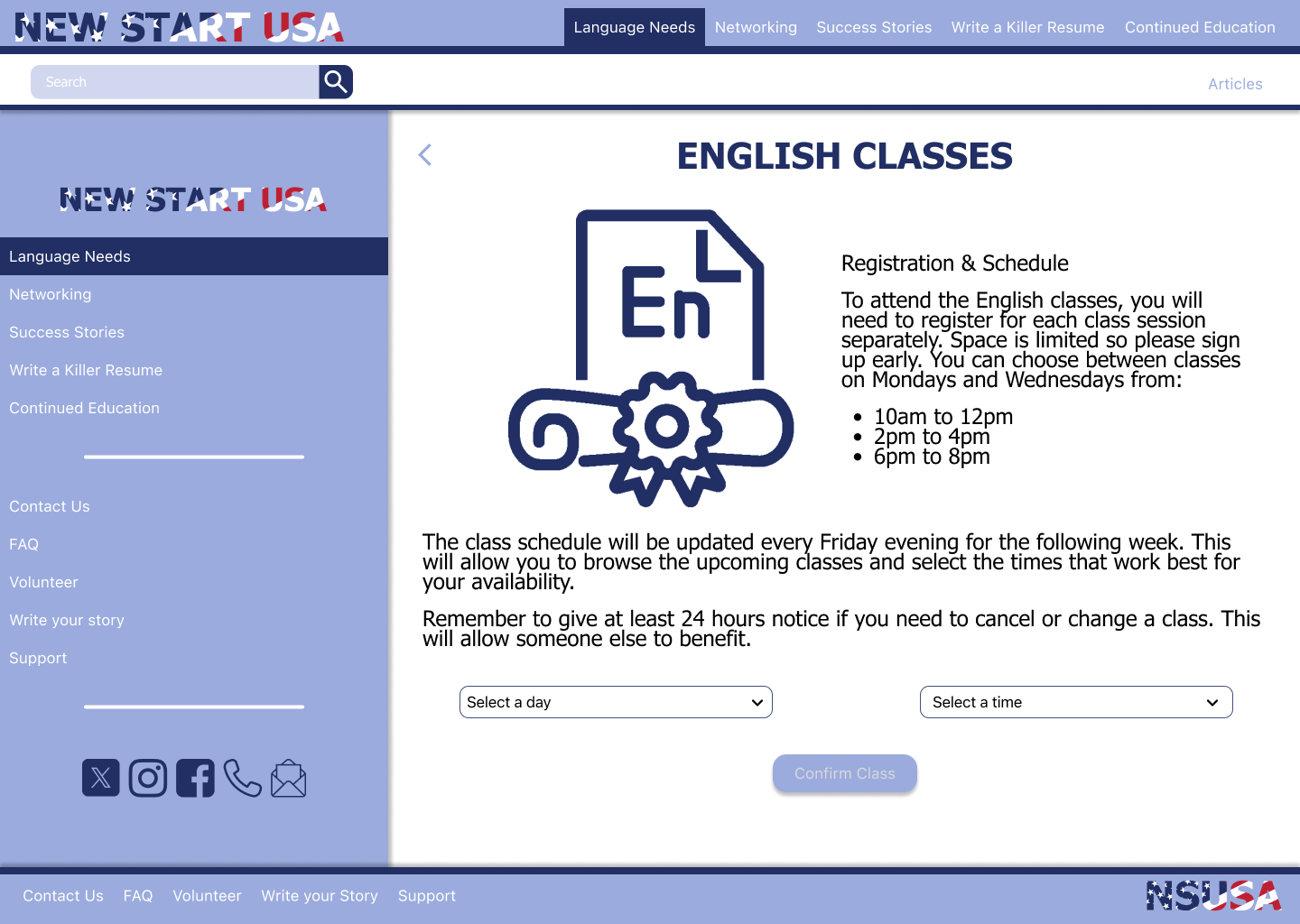
The progression from lo-fi to hi-fi was driven by feedback from the same user group. The most meaningful upgrade in the hi-fi version was the introduction of data visualization — giving users a clearer, more motivating picture of their career path and progress rather than presenting raw information as text alone.
Impact
Designing for a community I belong to reinforced something critical: individual assumptions — even well-informed ones — are not a substitute for listening to users. The data visualization upgrade came directly from user feedback, not from my own instincts. For a tool meant to empower people navigating one of the hardest professional transitions imaginable, getting that distinction right mattered.

Logo

Project Overview
Tools: Figma, Adobe Illustrator, Adobe Photoshop
Role: UX Designer
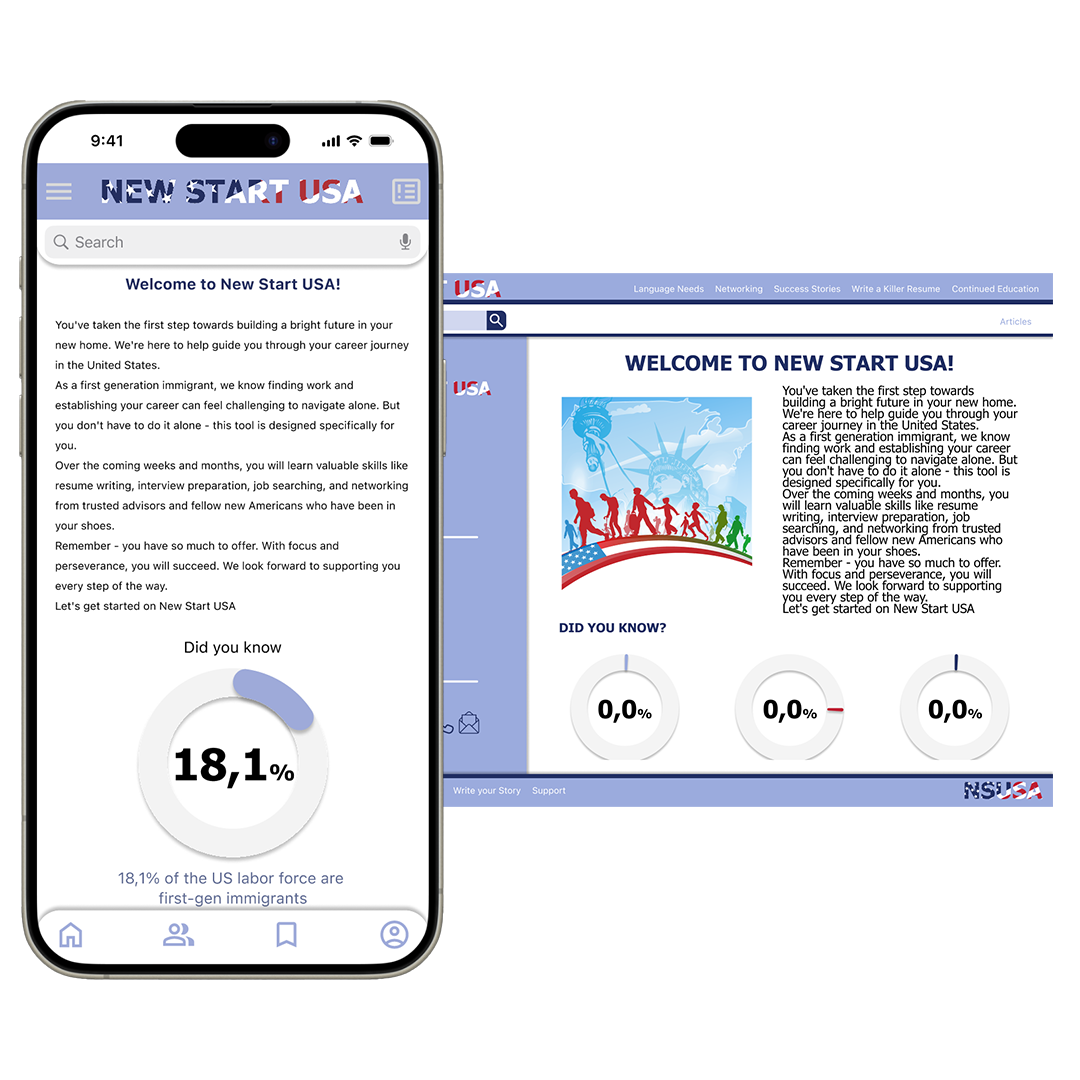
The problem:
First-Generation immigrants are faced with the challenge of professional validation when moving to America.
The goal:
Create a career coach tool that helps first-generation immigrants navigate the job market in the United States.
User Research
User Research Summary:
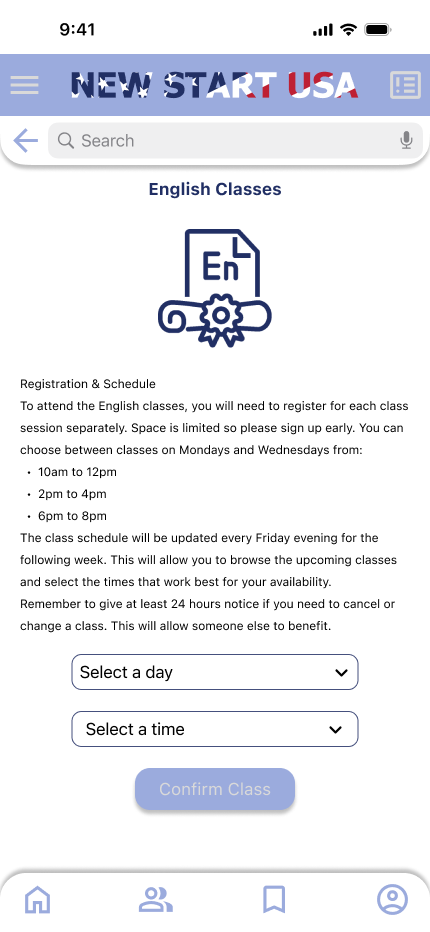
Our research shows that a tool tailored to support first-generation immigrants in the United States must provide comprehensive resources across several key areas, such as language training with job-specific vocabulary and cultural references, as well as guidance on translating foreign certificates and diplomas and experience for American employers. The tool should offer insights into navigating U.S. workplace norms, building diverse professional networks, and overcoming common immigrant barriers like legal requirements, discrimination, and unusual career gaps. Personalized support matching career guidance with cultural considerations, alongside success stories and mentors who are also immigrants, is important for inspiration and relatability. To ensure accessibility, the solution should have flexible formatting across multiple languages, as well as affordable pricing or financial assistance options. By accounting for these unique linguistic, cultural, legal and personal needs of the immigrant population in a holistic way, an effective career coaching tool can truly empower newcomers to maximize their skills and achieve professional success in the U.S.
User Research Pain Points
1. Language and communication barriers. Overcoming language barriers is a major obstacle for many immigrants seeking professional success
2. Difficulty translating foreign credentials and experience. Not having credentials that directly translate makes it harder to get hired.
3. Navigating cultural differences in the workplace and understanding American workplace culture norms. Cultural gaps can significantly hinder an immigrant's career growth.
4. Legal authorization and visa obstacles. Navigating complicated U.S. immigration systems is a major stumbling block.
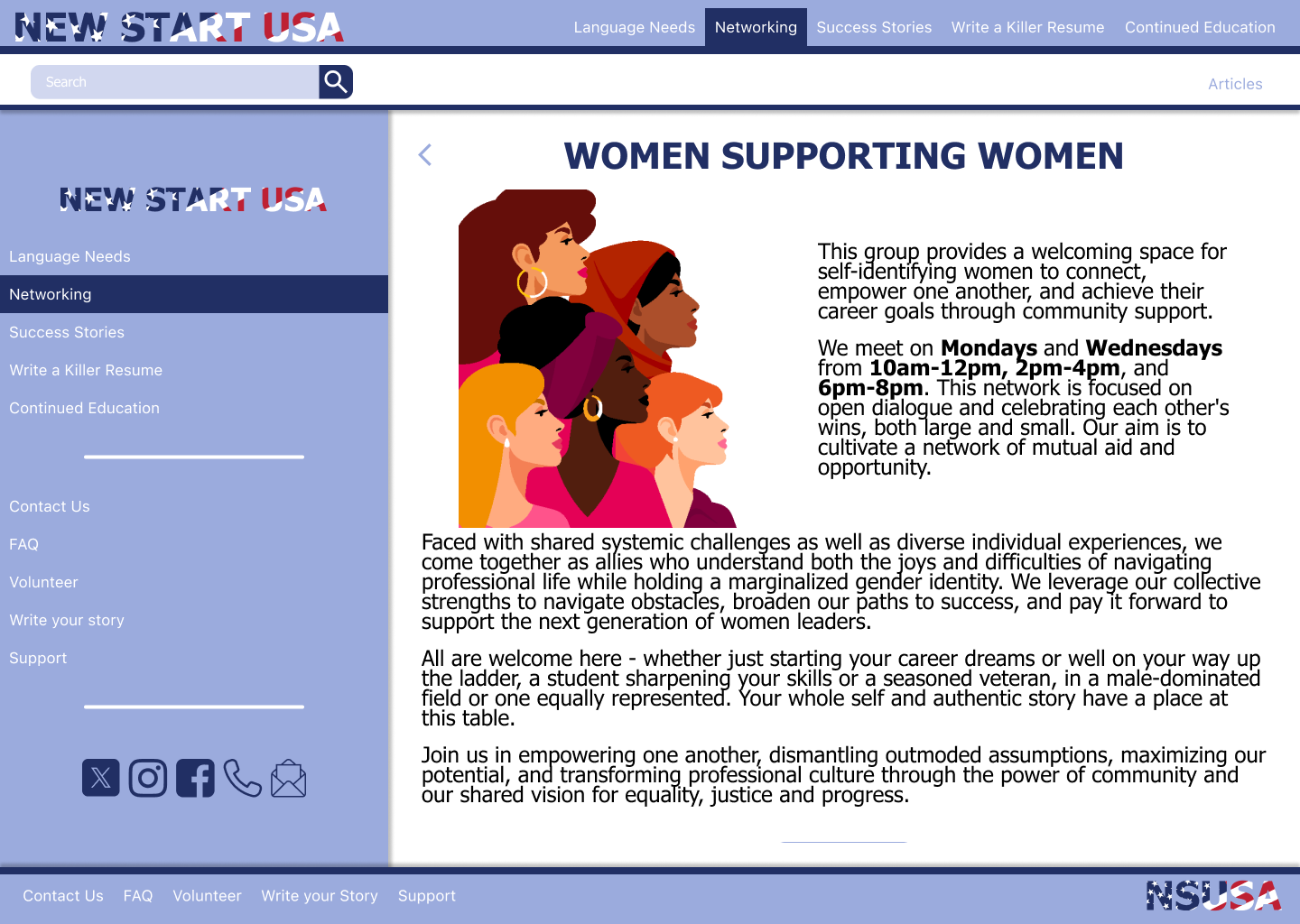
5. Lack of supportive networks and mentorship. Not having guidance from relatable role models is a significant disadvantage.
Personas

Ideation
Lo-Fi Prototypes
Mock Ups

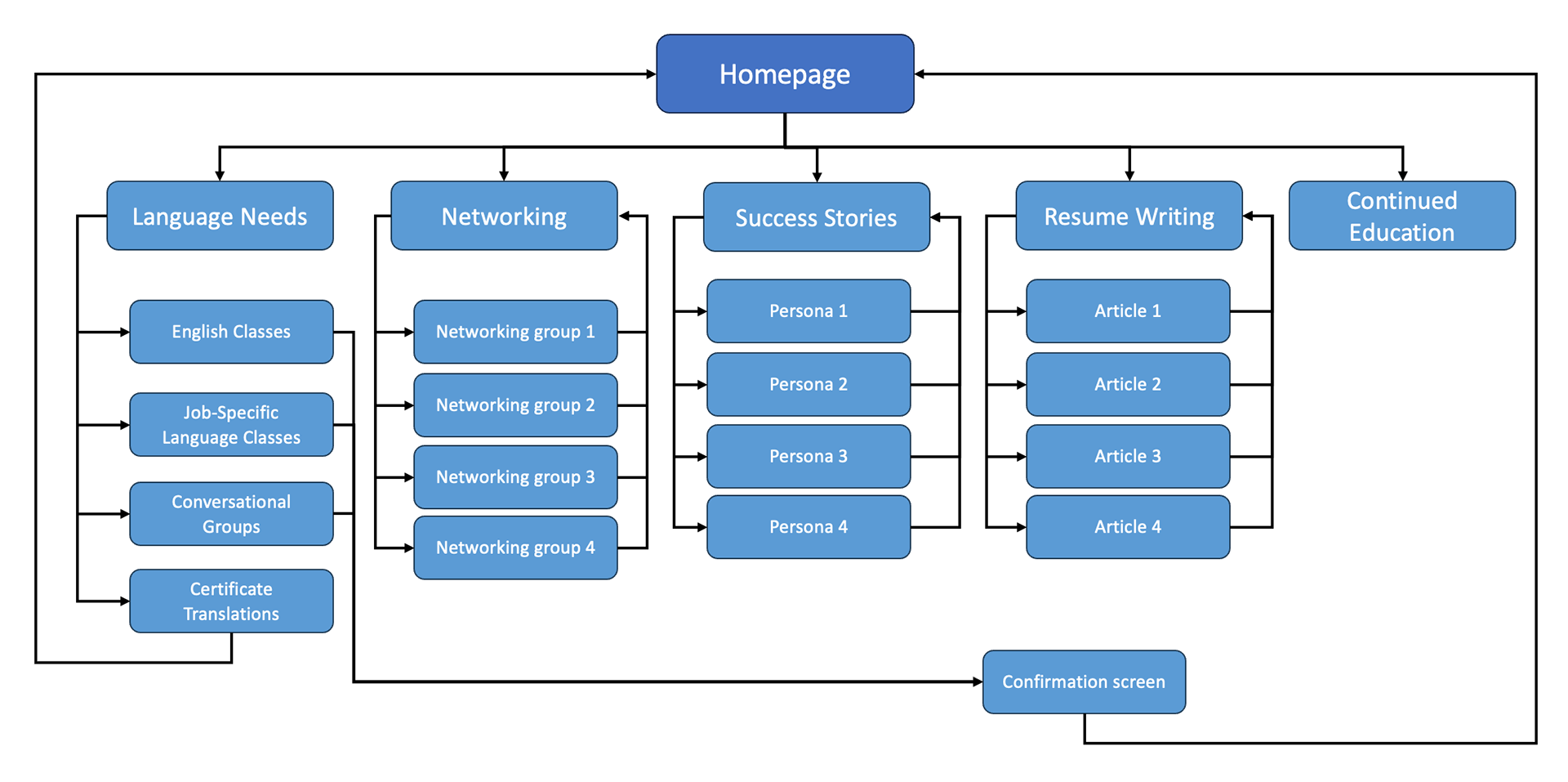
Sitemap
Hi-Fi Prototypes
Going Forward:
Impact:
Designing for a community I belong to reinforced something critical: individual assumptions — even well-informed ones — are not a substitute for listening to users. The data visualization upgrade came directly from user feedback, not from my own instincts. For a tool meant to empower people navigating one of the hardest professional transitions imaginable, getting that distinction right mattered.
What I Learned:
While some of their struggles, aligned with my initial assumptions, I learned that beyond just skills or language, many highly-skilled individuals were staying in their initial roles due to a lack of confidence.
It also became clear the language barrier encompassed more than just conversational abilities - people wanted training on job-specific vocabulary to feel comfortable in professional settings.
Additionally, social networks played a big role through word-of-mouth, but some were reluctant to utilize their communities due to embarrassment.